Saturday, 27 February 2010

Iron Maiden - The X Factor (1995)

Tracklist:
1. Sign of the Cross
2. Lord of the Flies
3. Man on the Edge
4. Fortunes of War
5. Look for the Truth
6. The Aftermath
7. Judgement of Heaven
8. Blood on the World's Hands
9. The Edge of Darkness
10. 2 AM
11. The Unbeliever

A Blaze of Glory – 9,5/10

The 90s sure were a hard time for metal bands. With the rise of grunge and nu-metal the old bands were cast aside. The old metal was somehow fading away and most 80s bands tried different styles, and so did Iron Maiden. Besides their vocalist replacement, which probably needs no further explanation, they obtained a very dark sound for this album. I hear complaining about the production, though I think it was done on purpose since it really fits the dark atmosphere the album contains, and so does new vocalist Blaze Bayley’s voice.

We are here at the beginning of this Iron Maiden album, listening to the very silent intro of “Sign of the Cross”. After some Gregorian chanting we have the bass guitar playing a gentle intro, as we are used to on the more recent Iron Maiden releases, accompanied by Blaze’s almost whispering vocals. When finally after a minute or so the band kicks in it becomes clear that the band have tried something different from the past. It’s still true trademark Maiden, but then with a different and darker touch. The rest of the opening song continues to be very epic, and the long interlude might seem confusing at first, but evolves into something very enjoyable at second. I first wondered why the hell this mid-paced long song would be the album opener, but then I realized this song was the definition of The X Factor. Lots of songs on this album feature a silent bass guitar intro, Blaze’s whispers during the intro and the epic vocal melodies when the band kicks in. Most songs are very dragging and mid-paced as well, such as “The Aftermath” or the first part of “Fortunes of War”. Apart from that, “Sign of the Cross” is just a great way to open the album, also to tell the listener that he should stop expecting “The Trooper”-kind of songs on here, because they’ve done something new. The lyrics are mostly about war and related themes, but instead of concentrating on the battlefield, they tell the tale about what war does to the soldier. Their lyrics are really striking and show them it’s not very much fun to be in a war. Not that we didn’t already know that, but we don’t realize what our boys are sacrificing for us on that battlefield, and that is very unique.

Let’s get into the album highlights a bit more. Songs like “Fortunes of War” and “The Edge of Darkness” start off with the trademark bass intro, then kick into a mid-paced epic full band part, and then go off fast into the trademark Maiden galloping rhythms with the guitar solos and their trademark legato guitar themes. These two songs, especially the latter, are truly two of the best songs off the album, leaving me struck not only by the epic music, but also by the great lyrics. The latter was based on one of the best movies I ever saw, Apocalypse Now. Another highlight of the album would be the up-tempo “Man on the Edge”, which really stands alone on here, since it’s the only continuously fast song on this release. It deals with suicide, and besides from that it’s got a true killer riff, killer drums, killer vocals and killer chorus. It’s a real killer song, so to say. It’s full of energy, and that’s what this album could use at some moments. Also worth mentioning would be “Lord of the Flies”. Though starting off with a weird sort of riff complemented with very stylish bass guitar and drums, it evolves soon enough into a relatively fast mid-paced song, with Blaze singing as great as he’s always done and the epic chorus. I this song is truly magnificent and certainly one of the best. I do not wish to describe each song on here separately, but they’re truly all great. Some tend to bore sometimes (“Judgement of Heaven”), but all the others are very beautiful and well-composed. There is, however, one oddity I’d like to discuss. “The Unbeliever” is closing the album with a very weird progressive 8-minute piece. This song is to this day still a one-of-a-kind Maiden song. It starts off with a nice riff, and then changes to a guitar melody consisting of natural harmonics. Before you know it Blaze is rapping, and then after a sudden speed change we get an atmospheric chorus, which gets repeated a little faster later. The intermezzo is really epic, and at the end we have the previous mentioned parts repeated a few times.

I think the album opens a new chapter to the Iron Maiden era, and then I’m not just speaking of the Blaze Bayley chapter, but also of the progressive chapter. Not that Iron Maiden are progressive, but they certainly try to be in their most recent albums. The songs are longer, have more content and tend to be more complex. The X Factor marks the beginning of that era by having two 8-minute plus songs and a majority of 5-minute plus songs.

Having said all these things, I think The X Factor is a very good effort by metal legends Iron Maiden. Though often looked at as a failure, I think it is their finest release to date. I would definitely recommend this album to anyone, whether they are familiar with Iron Maiden or not.

Strongest tracks: “Lord of the Flies”, “Man on the Edge” and “The Edge of Darkness”.

Scorpions - Eye II Eye (1999)

Tracklist:
1. Mysterious
2. To Be No.1
3. Obsession
4. 10 Light Years Away
5. Mind like a Tree
6. Eye to Eye
7. What U Give U Get Back
8. Skywriter
9. Yellow Butterfly
10. Freshly Squeezed
11. Priscilla
12. Du Bist So Schmutzig
13. Aleyah
14. A Moment in a Million Years

The Incidental Masterpiece – 10/10

Eye II Eye is the black sheep of all Scorpions albums. The band itself even stated in an interview that they did not like this album. It is so different from everything they ever released before that nobody really dared to actually listen to the album, although there is a small group of big Eye II Eye fans scattered across the world, which I will gladly represent in this review.

As soon as opening track “Mysterious” begins to play, we are immediately shocked by what happens. First we have an overdriven guitar to play a very short riff-ish something, and then some laid back drumbeat kicks in, only to be accompanied by an immensely laid back guitar riff, and a moaning Meine on the background. What the hell? Where are those typical Scorpions hard rock driven riffs with solid drums and catchy lyrics? Instead, we get to hear some insanely relaxing shit which only gets better when you’re a bit used to it. Vocalist Klaus Meine sings with a dirty low pimp-ish voice on the verses of many songs, sounding a bit hoarsely, but in the choruses he mostly shows off his clear voice, as we’re used to. The opening track evolves into an offbeat chorus and then back into the relaxing rhythms with the after-chorus. This song sets the tone for the rest of the album and is followed by the equally laid back single “To Be No.1”, obviously repulsive to many with its techno-ish beep in between. But also this one is nothing but a diamond! Just because it is so different from all the other Scorps-tunes it stands out! The relaxing ambience continues throughout the entire album, with heavy riffing occurring on various songs like “Mind like a Tree” or “Yellow Butterfly” and sometimes even classic Scorpions riffing like on “Aleyah” and “Priscilla”.

I will discuss some of the highlights of this album, to give a better overview. There is a gem in title track “Eye to Eye”, which is very gentle, almost poppy, but so very touching a ballad. It is about the deaths of the fathers of guitarist Rudolf Schenker and vocalist Klaus Meine, and the lyrics are so beautiful and Meine’s voice is so full of emotion, though hoarse, and the ambience through the entire song... indescribable. Then there is “Skywriter”. Though its verses might not be very catchy at first, the chorus will most likely get your attention. Not to mention the great bass tune underneath. Come to think of it, that bass player, Ralph Rieckermann, is truly a star on this album. On numerous songs his colourful bass playing really stands out, for example on “Mysterious”, “Yellow Butterfly”, “10 Light Years Away” and , of course, “Skywriter”. It’s really a pity this was his latest studio album with the Scorpions. An often disliked song would also be “Freshly Squeezed”, another one of my favorites. It sounds so damn wrong in the verses that it’s actually very cool. It sounds like some attempt at being modern, cool and hip with its fast and catchy verses and the offbeat rhythm throughout the song. They probably failed at being hip or modern, but they certainly made a cool song here. Another standout would be Priscilla, with a more recognizable Scorpions touch. As you hear Klaus Meine sing about Priscilla eating all his food and him planning to kill her, it was truly funny to hear that Priscilla seemed to be a cockroach! Didn’t see that one coming.

Classic Scorpions riffing on “Aleyah” must’ve satisfied all the naysayers of this album, if they would still be listening to this album and not be turned down by its weird ambience. There is just typical 80s riffing here and the chorus is so epic, especially at the end when the normal riff is placed underneath it and the epic solo comes through. The album is closed by the piano ballad “A Moment in a Million Years”, which is an emotional thank you to the fans. A great way to close the album, and I think most fans would appreciate the thanks after the ‘torture’ of this album. Only some fans, like me, will notice that the end song is just speaking up for what the entire album is.

As usual in my reviews of black sheep and hidden gems, here’s to the naysayers. Eye II Eye is not the typical 80s hair metal you are used to on albums like Love at First Sting, Blackout or Crazy World. This album is unique in its own way, and you can only see it if you manage to let go of what you wish. You can’t love this album if you hate it for what it isn’t, but you will if you can see it for what it is: the best Scorpions album ever recorded.

Strongest tracks: “Mysterious”, “Eye to Eye”, “Freshly Squeezed” and “Aleyah”.
Weakest tracks or fillers: NONE!

Friday, 26 February 2010

Scorpions - The Good Die Young [Single] (2010)

Tracklist:
1. The Good Die Young (radio edit)
2. The Good Die Young (album version)


Preview of the Sting – 7,5/10

The Scorpions have decided to release “The Good Die Young” as the first promotional single from their upcoming farewell album. A single usually is to promote the album it is from. The question is: does this single do its job well?

The song is a power ballad. It sounds like trademark Scorpions, and at the same time it doesn’t. It starts off with gentle arpeggiated chords, accompanied with some guitar leads. Then the drums kick in to form a steady rhythm on which the verse flows. It seems the lyrics of this song are about war and about young soldiers needing to come back. Then the chorus kicks in and there is the recognizable Scorps sound. It’s a heavy chorus with some solid riffing and some epic melodies. It’s closed by some more guitar leads, and then goes back to the arpeggiated chords of the beginning. This repeats itself three times before the song comes to a close after five minutes. The radio edit that’s also present just removes a repeat.

I must say vocalist Klaus Meine sounds like himself on the choruses, but tends to sound like Axl Rose or Serj Tankian in the verses. He uses his lower range and goes through the lyrics rapidly, leaving a nu-metal-ish impression. And there at the background of the verses we have guest vocalist Tarja Turunen making some opera-esque harmonies. Surely, she adds something great to the song, but nothing that would not have been possible to be replaced by keyboards. It probably would’ve been a better cooperation with a full duet between her and Klaus. Overall, I think the song does a good job. It has energy, a mid-paced groove and a very memorable chorus. The only thing that it lacks is a good guitar solo. What happened there? The Scorpions were always known for their striking solos, but nowadays they seem to be lacking. Ah well, apart from that, it’s a good song.

In the end, I think this single does the job. It might not be the classic Scorpions sound, but it certainly is a good song, and the boys did a good job. I’m looking forward to Sting in the Tail even more now I know there’s at least one good song on it. Hopefully the other songs do have solos though, it really adds a lot.

Coldplay - LeftRightLeftRightLeft (2009)

Tracklist:
1. Glass of Water
2. 42
3. Clocks
4. Strawberry Swing
5. The Hardest Part
6. Viva la Vida
7. Death Will Never Conquer
8. Fix You
9. Death and all his Friends


A Gift from the Gods – 9/10

British pop legends Coldplay decided to release a free live album consisting of live material from their Viva La Vida tour as a thanks to their fans. Everybody was able to download the soundfiles for free, and all concertgoers had the opportunity of actually holding the original CD in their hands. My first thought was quite negative. How much good can it be when it’s been given away for free to billions of fans? After a few spins it became clear that Coldplay were really thanking their fans and were not joking. This live album is, though short, excellent in many ways.

First, there is the sound. The production is excellent. This collection of high quality live recordings truly is the best gift ever. We can separate all the instruments, including the vocals, very easily, which is a great thing. The fans are very audible as well, which adds a whole lot to the live atmosphere. Second, there is the performance of the band. Coldplay is truly a live band. Were they not already great in studio, they take the songs to a whole new level on stage. The interaction with the crowd is also very good. It’s just great to hear those thousands of fans sing along with the best of Coldplay songs. Furthermore, Chris Martin is the true show man here, adapting the lyrics of classic hits like “Fix You” to fit the concert, and holding a long note on the end of “42”. True highlight is their biggest hit of their latest album, the notable “Viva la Vida”. The crowd totally goes insane here, and at the end we still have those fans sing the melody on and on. A bit odd, but a pleasant surprise is the inclusion of b-side “Death Will Never Conquer”. Though the studio version is piano-only, the live version is played with the whole band minus drummer, who sings instead of Martin. It becomes a nice short country-styled song in between, and drummer Will Champion has a great singing voice. We’ll be expecting his solo CD someday. Last of the truly notable songs is album opener “Glass of Water”. This is probably the recording of the very first time it’s played live, said to have been somewhere in November.

Looking at the tracklist, we see that Coldplay has included mostly songs from their latest effort, Viva la Vida. The band stated this was what they sounded like at this moment. Fair is fair, if this is what they sound like right now, then I would gladly want to go to a Coldplay show. This is truly a great gift and gives a very good impression about this band and what they have done in the most recent years.

Highlights: entire album.

Thursday, 25 February 2010

Amon Amarth - Twilight of the Thunder God (2008)

Tracklist:
1. Twilight of the Thunder God
2. Free Will Sacrifice
3. Guardians of Asgaard
4. Where Is Your God?
5. Varyags of Miklagaard
6. Tattered Banners and Bloody Flags
7. No Fear For the Setting Sun
8. The Hero
9. Live For The Kill
10. Embrace of the Endless Ocean

Prepare to Sacrifice your Free Will – 8,5/10

Amon Amarth... I never actually heard of them when I listened to this album. I checked a few pictures of them... it seems they are bearded hairy men who look like they live in the dark ages. Apparently they can make music too, and they’re not just your average death metal band either. And they seem quite popular, and when I hear the music I totally understand. I guess this is what people call ‘Viking metal’; melodic death metal with some folky tunes every now and then, complemented with lyrics about ancient gods like Odin and Thor. The whole lot surprised me a little bit, since I actually was expected the average death metal band I despise. Instead, I got to hear an album by a band with talent and a unique sound.

These guys have a very heavy sound created by two guitars and a bass, one that’s really fat and juicy. Complemented with the heavy drums of Fredrik Andersson and the deep growls of bearded vocalist Johan Hegg, you’ve got the main ingredients for a melodic death band. The songs are catchy and melodic but still very heavy, which makes them attractive. Mostly they have some good lead guitar melodies during the chorus, making it epic and memorable, like on “The Hero”. I guess it’s a part of the Viking-attribute to have lead guitars play a folky melody to add some catchiness. Also, these guys are not extreme. They create heavy death metal, but there are no blastbeats, aggressive screams and/or other wild things. This is purely creating good songs with enough variation, purely for the music. I can’t actually say the same about other bands in their genre, though there are always exceptions. There are fast anthems on here such as the title track, “Where Is Your God?” and “Live for the Kill”, also mid-paced little epics such as “Free Will Sacrifice” and “Guardians of Asgaard”, which are two of the best tracks on the album, and there is an epic album closer in the shape of “Embrace of the Endless Ocean”, which does not only have a catchy title, but is truly epic in its own way. There is not one weak song on here.

It’s time to have a look at the highlights of this album, and thereby describing some more details. Title track “Twilight of the Thunder God” features some real catchy guitar melodies as the main riff, and after about four times the theme the speedy drums kick in with a double bass. The deep growls are really one of the best I have ever heard. There’s also some notable guitar soloing here. “Free Will Sacrifice” features some weird-ish riff, which easily became one of my favorites after a few listens. And again it is the melodic lead guitar at the chorus which adds the finishing touch to the album. As if the first two songs were not good enough, in comes “Guardians of Asgaard”, with a bombarding riff, so powerful I was just blown away. Then the song goes into a true Viking-melody that sounds like a child’s song when played on the piano, but like a true metal anthem when played on a down tuned guitar like here. The bombarding riff returns a few times at the chorus, which is one of the highlights of the album. Then comes the very fast “Where Is Your God?”, which actually has a quite funny lyric and some very speedy double bass drumming. I think the highlight of this song is when the song drops dead for a second and you hear the vocalist take a breath for the last chorus. The other songs of the album all feature a steady riff with memorable Viking-melodies and deep growling, but they are not as memorable as the first four songs. Last but not least I want to praise the drummer. Fredrik Andersson is no beginner behind his drums, damn! His drumming is very appropriate on every song and just so inventive and so much variation.

So, this album is very good. Not much more I can say about it. If you’re into the genre or into Amon Amarth, this album is a must-have. If you are new to the genre, this album will be the one that gets you into it.

Strongest tracks: “Twilight of the Thunder God”, “Free Will Sacrifice” and “Guardians of Asgaard”.

Monday, 22 February 2010

Coldplay - Parachutes (2000)

Tracklist:
1. Don't Panic
2. Shiver
3. Spies
4. Sparks
5. Yellow
6. Trouble
7. Parachutes
8. High Speed
9. We Never Change
10. Everything's Not Lost


Solid Debut with Necessary Flaws – 7/10

Here we have the first album by Britain's new pop-legends Coldplay, entitled Parachutes. As a very first album, it is very clear that the sound Coldplay have here needs heavy polishing. Although this album features some of the better Coldplay material, it is countered with downright boring material, which features mostly on b-sides nowadays. But what this album truly needs to be praised for is its unique Coldplay signature sound.

First, let’s analyze this band. What do they sound like? Vocalist Chris Martin seems to have an awkward yet unique voice, and requires getting used to. His frequent use of falsetto gives a slightly wimpy sound to the music, and that’s where he fails sometimes. On the more gentle songs like “Sparks” or “We Never Change” on the other hand he really tends to sound like singing a lullaby, making you fall asleep. Apart from that he does have a very decent vocal range. At the drums we have Will Champion, who is really stealing the show on this album with his extensive drumming. What disturbs me mostly with pop music is, despite the lack of solo’s, the lack of originality in either melody or rhythms, but Champion makes the rhythm department worth listening too. On the bass guitar we have Guy Berryman, who is not notable on the album. What he does, he does properly, but that’s it. Oh and on guitars we have Jon Buckland, who is very influenced by The Edge of U2, judging on his playing style. Again, this guy is good at what he’s doing, but I’d like to hear more. A solo or anything like that. But I guess I mustn’t judge these guys on what they’re not, so let’s get a bit more into what they have produced.

Parachutes opens with a very mellow, atmospheric song, known as “Don’t Panic”. Notable is the upbeat drums combined with slide guitar leads by Buckland and Martin’s mid-ranged vocals. This opener sets the perfect ambience for the rest of the album, and therefore makes a powerful impression, despite its short length. Then comes the wilder “Shiver”, which is a true feast for the drummer, since he is forced to play subtly on all the other songs, but on here he can smash on the crash cymbals for once. The main riff is a very notable guitar piece, but then the verses ease down a bit and feature a very catchy piece of lead guitar, subtly reminding of U2. This trend continues through “Spies”, but is spoiled by the ballad “Sparks”. This song is the first of the few that are lullaby-ish, and downright boring. There’s very gentle clean guitar doing the rhythms, possibly sopped in a chorus effect, combined with very soft drums. Furthermore we have Chris Martin singing so damn monotone on a low register, which just takes away all the fun. Then he repeats that boring line “I saw sparks” so many times at the end, with the backing instruments never seeming to change the dynamics. Other songs that feature this description are “High Speed” and “We Never Change”. This kind of songs is what brings Parachutes’ rating down a lot. Fortunately, the majority consists of great compositions.

To pass on as if nothing ever happened we have the explosive “Yellow”, with relatively heavy rhythm guitars opening up, only to fade away again at the verses. This song is a real relief after the sleepy “Sparks”, especially to hear Martin sing fully again. But Coldplay do know how to write ballads without creating lullabies! Next track “Trouble” is a great example of a good Coldplay ballad. It starts with a simple but catchy piano tune, and after a while the band jumps in, with the guitar playing some gently arpeggiated chords and the drums playing a subtle and gentle rhythm. The only thing that can get better here would be a guitar solo, but instead we get to hear “They spun a web for me” a thousand times repeated, which is very unfortunate. As an intro to “High Speed”, which I’m not going to describe” we have the very short title track “Parachutes”. I don’t understand what’s the point of this track? It lasts just a few seconds longer than a minute, and is nothing really exceptionally good. Just some more low ranged vocals and some staccato acoustic guitar. I’m glad to see that the album is closed with style. “Everything’s Not Lost” is a good song to close the album with. It’s building its strength all the way to the middle when Martin is jumping up and down of joy and singing happily “Come On yeah, ooh ooh yeah, and everything’s not lost”. This was awkward at first, but quite acceptable now. It’s a bit of a prototype for “Amsterdam” or “Twisted Logic”, both ending songs of later Coldplay albums.

To make this long story short, Parachutes is a good debut album. It has its flaws, it has its strengths. I would recommend this album to every Coldplay fan, though if you are new with the band, you might want to check out their later albums first. They do not contain lullabies.

Strongest songs: “Don’t Panic”, “Shiver” and “Yellow”.
Weaker songs: “Sparks”, “High Speed” and “We Never Change”.

Sunday, 21 February 2010

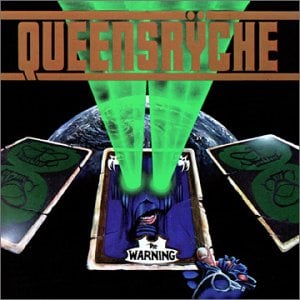
Queensrÿche - The Warning (1984)

Tracklist:
1. Warning
2. En Force
3. Deliverance
4. No Sanctuary
5. N M 156
6. Take Hold of the Flame
7. Before the Storm
8. Child of Fire
9. Roads to Madness


One Hell of a Debut - 7,5/10

The Warning was the album with which Queensrÿche introduced themselves to the metal scene. Being a typical debut compared to their later work, it’s obvious that this album contains many influences from popular bands at that time such as Judas Priest and Iron Maiden, yet Queensrÿche manages to distinct themselves from those bands at the same time. Given that this album is probably the one that resembles the standard 80s metal the most of all Rÿche releases, this doesn’t make it one of the best, but certainly one worth checking out.

So, as a very first album, what does Queensrÿche sound like? A bit music like Iron Maiden and vocals like Rob Halford, but then they give their own twist to both, which is probably what made this album so notable. Geoff Tate indeed resembles Halford in vocal range, but has an entirely unique way of singing. His wailing voice contains so much emotion, especially in his younger years, and every time I hear it I get struck by it again. On this album he sometimes goes sky high and still keeps his voice balanced, like on “Roads to Madness” for example. Tate is truly the highlight of this album, with only one downside: he almost never uses his lower range vocals, which doesn’t have to be a downside, but sometimes I get the feeling he swallowed helium or so. He sounds like a siren at times. The other band members work great together as well, although it sometimes seems as if there is a strong reverb added to the music as a whole, and sometimes they tend to sound uninspired, like in the unnoted “Child of Fire”.

The music sounds a bit Maiden-influenced, as said before, but also on this area Queensrÿche manages to differ from the Brits. Where Maiden would go into galloping rhythms, Queensrÿche chooses an alternative, such as the staccato rhythms on “N M 156” or the powerchord-based accompaniment on “Deliverance”. Where Queensrÿche goes totally into their own sound, is for example on “En Force”. Both guitars are playing some licks on the background, which forms the unique riff, the drummer is playing wild with his double bass drums and the combination of this with Tate’s voice creates the early trademark Rÿche sound: energetic metal that is not very catchy at first, but it grows on you. Another difference you’ll find with early Iron Maiden is the appearance of power ballads on the album. “No Sanctuary” and the epic “Roads to Madness” for example both begin with arpeggiated chords as the intro and the verses, but explode into a powerful chorus, full of emotional vocals and epic riffs. “No Sanctuary” also features a gentle interlude instead of a solo, which adds a lot more to the suddenly returning chorus. The other, “Roads to Madness” will feature a very spectacular guitar solo, with the whole song speeding up at the end as a last treat. Furthermore, although the band is Maiden-influenced, it totally has its own sound. The arrangements, the way the drums accompany the riffs, the structure of the riffs, it’s all less catchy then Maiden, but after a few listens it easily beats Maiden riffs. That’s what Queensrÿche is all about, the band is a grower.

So, in fact we have a pretty good debut album here. With singer Geoff Tate as the primary attraction and good songwriting as a good backup, The Warning is well worth your money. Although there are a few steps in the wrong direction here and there, it’s very pleasing for your hearing. The REAL treat, however, starts on their next album Rage for Order, where they have really adopted their own sounds. Still I’d highly recommend this to any fan of 80s metal or Queensrÿche.

Strongest tracks: “No Sanctuary”, “Take Hold of the Flame” and “Roads to Madness”.
Fillers: “Child of Fire” and “Before the Storm”.