Friday, 30 April 2010

Queen - A Kind of Magic (1986)

Tracklist:
1. One Vision
2. A Kind of Magic
3. One Year of Love
4. Pain is so close to Pleasure
5. Friends Will Be Friends
6. Who Wants to Live Forever
7. Gimme the Prize
8. Don't Lose Your Head
9. Princes of the Universe


Hahaha, it’s Magic! – 8/10

The 80s period was a time of synthesizers, but when those become boring and old again bands like Queen returned to the good old rock ‘n roll, with the occasional synth still popping up, but in a mature way. A Kind of Magic is in a way more of the synth-oriented pop-rock that featured on The Works, but is executed in a much more bearable way, including one of Queen’s greatest front covers. Lots of hits shot this album to the top position in the charts; at least in the UK. These hits are considerably less cheap and simplistic, leaving quality within the album like we were used to. The sudden recover from synth-addiction, it seems to be some kind of magic...

Some people like to talk of A Kind of Magic as an album that expands the direction of The Works. However, with synths being used much more appropriately and with songwriting being a lot more innovative, I think there is a slight, if not a huge difference. Gone are the synthesizer themes and beats, back are the rock riffs. However, keep in mind that this is 1986 and Queen is not playing material of the likes of Queen II or A Day at the Races anymore. What they now do is still a commercial extract of 80s rock ‘n roll. The album has its fair share of hits, including “One Vision”, the title track, “Friends Will Be Friends”, “Who Wants to Live Forever” and “Princes of the Universe”. “One Vision” is a down-to-the-bone rock track and for the first time since A Day at the Races we get an album opened by sheer rock. “A Kind of Magic” seems based on a looping bass line and a mysterious atmosphere, and additionally a great guitar solo by our dearest Brian May. “Friends Will Be Friends” is a cooperation between Deacon and Mercury. It’s a very hopeful track with a light catchy riff and extremely attractive melodies. No wonder that became a hit. May writes a hit with “Who Wants to Live Forever”; a very gentle track with orchestra. Though some say it’s Queen’s most overrated song, I think it just depends on how much you’ve heard it. Too many listens turn every song into an overrated piece of fruitcake. “Princes of the Universe” is the only composition on this record written solely by Mercury and features a damn good rocker which also became a bit of a soundtrack for the movie Highlander.

Apart from the hits, we’ve got some pretty enjoyable album tracks as well, though some of these tend to be a tiny bit dull at times. Myself I’m pretty fond of Deacon’s “One Year of Love”, which is a very soft ballad with very touching vocals by the late Mercury. It makes good background music as well. There’s of course hard rock track “Gimme the Prize”, with lyrics again forwarding to the movie Highlander. This track pretty much is the heaviest track Queen recorded since Jazz’s “More of That Jazz”. There are two synth-dominated tracks in the shapes of “Pain Is So Close to Pleasure” and “Don’t Lose Your Head”. The former features Hot Spacey arrangements with Mercury’s falsetto voice, but then disguised as a Magic-track, and the latter is just a pop song with no hints of Hot Space or The Works, but just happens to feature quite a lot of synths. The song fits the album well and its bombastic drums quite impress the listener as the title once more refers to the movie whose soundtrack this is.

Funny enough, this album sounds much better to me than the two previous records, even though there might be resemblances between them. The return of real rock to Queen is a real relief though, and I’m glad they from now on stuck to rock again. Of course, they were already showing us they could still rock with “Hammer to Fall”, but with A Kind of Magic they proved to have some magic left within them, which is enough to fill some more albums. If you like commercial Queen, then I would recommend this album to you. If not, you’d better take a listen at the early albums.

Strongest tracks: “One Year of Love”, “Who Wants to Live Forever”, “Gimme the Prize” and “Princes of the Universe”.

Thursday, 29 April 2010

Queen - The Works (1984)

Tracklist:
1. Radio Ga Ga
2. Tear it Up
3. It's a Hard Life
4. Man on the Prowl
5. Machines (Back to Humans)
6. I Want to Break Free
7. Keep Passing the Open Windows
8. Hammer to Fall
9. Is This The World That We Created?


Synths & Commerce Combined – 4/10

If Hot Space was just a big departure from the things done before, then The Works was the return to their more trademark rock sound, this time accompanied with some leftover elements from Hot Space: synthesizers. Oh how I wish those things were never invented. But then again, only in the 80s people really knew how to kill music with them. The Works is such an album featuring a rock band doing what they do, but this time drenched in synths. Commercially, it brought them many big hits, yet these are not really timeless masterpieces. I guess commercial success is just another double-edged sword to be reckoned with.

Hot Space was just a synth-driven album, but not commercial in nature at all in terms of hits. I can appreciate an album at that level, but The Works, which has probably been in the works for a very short time, at least it sounds like that, seems like Queen desperately trying to come back and fill the record space with mindless pieces of music that mostly remind of works of the past. This album feels like it’s all been done before, but then ten thousand times better. For example “It’s a Hard Life”, though a good song, which is a rarity on this album, reminds heavily of “Play the Game”. “Man on the Prowl” links back to “Crazy Little Thing Called Love” with its rockabilly styled composition. Also the other tracks have a kind of ‘heard before’-feel to them. The album begins with the synth-driven “Radio Ga Ga”. The first thing I noticed was the flat drumsound. Hey, these are synth-drums! They should’ve called this album The Synth-Works. The song itself continues along with even more synth-arrangements to create a synth-opener for a true synth-album. No more of that synth, as Roger Taylor would’ve sung in the 70s. What changed his mind? I don’t know, but he’s responsible for “Radio Ga Ga”. “Tear it Up” has some catchy parts but in fact just feels like an incomplete 80s rock song without too much content.

But there are some good sides to this album, even if that’s very hard to believe. “It’s a Hard Life”, though a remake of “Play the Game”, has the same magic of the original and is quite a good song. “Hammer to Fall” is a good example of the Philips slogan ‘sense and simplicity’. The riff is fairly simple, but oh so powerful. It has become one of my favorite Queen 80s songs. Especially Brian May’s solo really stands out. And furthermore I think “Keep Passing the Open Windows” could be a nice track, even though it’s synth-overloaded. Other tracks rank deeper into mediocre such as the famous hit “I Want to Break Free”, which is just another generic hit put together by John Deacon, who seems responsible for the lamer hits of Queen such as this one and “Another One Bites the Dust”. And let’s not forget “Machines (or Back to Humans)” by Brian May and Roger Taylor. The two worked hopefully on this track that pretends to be a potential track with lots of content, but in fact features more of the synth-covered cake we’ve already eaten, decorated with the occasional guitar chord on top. Oh and let us not forget the oh so epic closer ballad “Is This the World that we Created?”! Isn’t it oh so sensitive with Freddie crying about us having ruined this world full of murder and deceit? No it isn’t. I like songs with messages inside them, but I dislike them if they’re as superficial as this one, packaged in a quite boring song.

Need I say more? This album lacks quality in every corner, with the exception of a few songs. If you are really fond of synthesizers and everything that they dominate, and in the meantime don’t mind the extremely commercial, and thus simple, nature of the album, you should buy The Works. I think you’ll enjoy it. If you prefer quality music, then get “Hammer to Fall” and ignore the rest.

Strongest track: “Hammer to Fall”.
Weakest tracks: “Radio Ga Ga”, “Tear it Up”, “Man on the Prowl”, “Machines”, “I Want to Break Free” and “Is This the World That We Created?”.

Wednesday, 28 April 2010

Queen - Hot Space (1982)

Tracklist:
1. Staying Power
2. Dancer
3. Back Chat
4. Body Language
5. Action This Day
6. Put Out the Fire
7. Life is Real (song for Lennon)
8. Calling All Girls
9. Las Palabras de Amor
10. Cool Cat
11. Under Pressure


The Synths Strike Back – 6,4/10

And finally we’ve come to Queen’s most disliked album of all time, Hot Space. Nevertheless, it did contain one of their bigger hits, “Under Pressure” featuring David Bowie. The album is mostly disliked for its break with the traditional Queen way of making music. It is dominated by disco influences and synthesizers and sounds very different from any other Queen album. Actually I do understand that Queen wanted to experiment for once. You can’t possibly do the same or at least try to do the same all the time. Risks are needed and sometimes a band goes for it. Mostly I like such risks like on the Scorpions’ Eye II Eye, Megadeth’s Risk or Judas Priest’s Nostradamus, but I’m not so sure whether I’m all that happy with Hot Space.

It seems the terror is mainly hidden on the first few tracks of the album. “Staying Power” right away starts with this synth-bass line and a Freddie Mercury who is quite enjoying himself. Actually it’s him who gives most boring songs on here a good lift-up with his ‘yeah’ and ‘woo!’ in between. Synth-based themes come back in the May-penned “Dancer” although this one tends to become more of a rocker when the solo begins. Deacon strikes us with his “Back Chat”, which contains friendly synth-pop with another soaring solo. Apart from “Staying Power”, I could say these tracks are quite enjoyable. They’re perhaps different from anthems like “Fat Bottomed Girls” or “Love of my Life”, but certainly are charming in a way. Especially “Dancer” invites listeners to fill the dance floor. And that’s what Hot Space is all about. It’s about filling the dance floor. But then it’s a very dated 80s dance floor to be filled, and that’s on the negative side of the album. A climax has been reached with the Mercury-written “Body Language”, which is perhaps the most controversial Queen song to date. It’s based around a dirty synth-bass line, which actually is not that bad. What nails the song is Mercury’s longing for sex as he praises ‘your’ body, which he apparently desires. With quite dirty lyrics, executed in an even more dirty way, the song becomes dirty and infects the otherwise cool synth-bass. Perhaps a song like this should’ve been for Mercury’s solo career instead?

The second half is a more familiar side as they make more use of normal bass guitar and add more guitars to the tracks. Roger Taylor saves the day with two splendid songs, “Action This Day” and “Calling All Girls”. The former is easily my favorite of the album, featuring a steady rock rhythm with a cool riff, not to mention it’s another duet between Freddie and Roger, and those always do the trick. The latter is more in the vein of “Dancer”, yet is based on an acoustic guitar instead of synths. Brian May brings us a real rocker with hilarious lyrics in “Put Out the Fire”, being somewhat repulsive mostly due to the flat production and sound, which I think was done on purpose for the disco effect. That doesn’t make it alright, though. Furthermore there’s a slick ballad “Life is Real”, which is good, but slightly to very much ruined by the sudden “Life is a bitch” at the end. All of sudden the atmosphere of a gentle ballad is ruined because of his ““cool”” use of words. “Las Palabras de Amor” is an instant stadium song, which could’ve been a much bigger hit if it were on a ‘normal’ album with ‘normal’ production. It’s a really powerful anthem with a strong synth theme. “Cool Cat” features Mercury on his falsetto-voice, while being accompanied by a very relaxing rhythm guitar. The song isn’t worth more than two listens in your life. And then finally there’s the much anticipated “Under Pressure”. It obviously sounds the most Queen. Despite it being a big hit I think it’s quite obviously one of the better songs of the album, mostly because the rest isn’t really interesting.

Additionally, even though I said about quite a few songs that they were enjoyable, it’s all just not the level it has been. As for the experiment, I think it succeeded. It’s mostly just the genre why I dislike it, not the failure in quality. Now, if all this talk about discos, dance floors and synthesizers has got you all excited, then I could recommend this album to you. Else, be warned.

Strongest tracks: “Action This Day”, “Las Palabras de Amor” and “Under Pressure”.
Weakest tracks: “Staying Power”, “Body Language” and “Cool Cat”.

Sunday, 25 April 2010

Kayak - Eyewitness (1981)

Tracklist:
1. Eyewitness
2. Periscope Life
3. Ruthless Queen
4. Want You To Be Mine
5. Lyrics
6. Chance for a Lifetime
7. Who's Fooling Who
8. Irene
9. Only You and I Know
10. Winning Ways
11. Starlight Dancer
12. No Man's Land
13. The Car Enchanter [*]
14. Ivory Dance '94 [*]

Supposed Swan Song of a Great Band – 5/10

Due to Merlin’s lack of commercial success things went drastically wrong with Kayak and before we knew it they were facing their end. The female backing vocalists left the band, reducing the band’s size to five members. They recorded this fake live album just before Max Werner, Peter Scherpeneel and Edward Reekers left. Soon afterwards new members were hired, like ex-member Bert Veldkamp on bass, but they eventually were a different band under the name of Europe. In other words, the original Kayak legend was ended with Eyewitness, a studio live album.

So what does this album feature? There are three songs never heard on a genuine studio album before: “Eyewitness”, “Only You and I Know” and “Who’s Fooling Who”. They could all have been on the Starlight Dancer LP in terms of style. All three songs are worth listening to. The rest of the album is filled with the bigger hits and mostly with songs from their commercial period. It’s sad to see there’s no Merlin material played. Now this is not the only sad thing. A live album can still be saved by the great interaction with the crowd. As I bought the CD with its beautiful front cover, I was expecting to hear the crowd welcoming me. Unfortunately, there’s no crowd. You heard me, there is no crowd! No fans cheering. It seems Eyewitness is recorded ‘live’ in the studio, featuring overdubs and everything. They asked five fans (or perhaps a bit more) to listen to the recordings and clap and cheer as they would do in a real concert. Apparently, Ton Scherpenzeel was ashamed of that decision (and he should be!) and released the CD version without the crowd. So what we have here is a stripped down live performance.

*sigh* Well... yes the performance is tight. Yay, we have three new songs. Even if it were a live album it would be very boring. There is never a ‘Thank You!’ or a ‘This is Ruthless Queen!’ announcer anywhere. Of course, recorded in the studio this is obvious, but hey! If you’re trying to fake a live album than at least give it a good shot! These re-recordings are not at all fun to listen to, even if they might sound good. The only song that is different from the studio version is “Periscope Life”, which now features a heavier guitar riff and some better keyboard arrangements. Apart from that, it’s all the way we know it. Nothing out of the ordinary. Except for the new songs of course, which are good. But still, I’d like to hear the version with the crowd once. As all CD releases released through Pseudonym records, Eyewitness features two bonus tracks as well. “The Car Enchanter” is just the same as Merlin’s “The King’s Enchanter”, but then with different lyrics to promote a paint-factory. “Ivory Dance ‘94” is a re-record of the b-side “Ivory Dance” and is funny and nice, but not essential. No matter how you see it, this album is far from essential and nowadays it is more of a Best Of than a live album.

All in all, Eyewitness is not a good record. Don’t expect anything breathtaking. The band plays good, the singers sing good, but hey: they always do so in studio. Get the new tracks through iTunes or something like that, and forget about the rest. This album is for collectors only.

Queen - Greatest Hits I (1981)

Tracklist:
1. Bohemian Rhapsody
2. Another One Bites to Dust
3. Killer Queen
4. Fat Bottomed Girls
5. Bicycle Race
6. You're My Best Friend
7. Don't Stop Me Now
8. Save Me
9. Crazy Little Thing Called Love
10. Somebody to Love
11. Now I'm Here
12. Good Old-Fashioned Lover Boy
13. Play the Game
14. Flash
15. Seven Seas of Rhye
16. We Will Rock You
17. We Are the Champions

The End of the First Chapter – 7,5/10

And that end is celebrated with the release of Greatest Hits, nowadays called Greatest Hits I. We are at the border of Queen’s big musical change and there’s nothing better than to quickly remind how it was before that change. I can’t say I’m particularly crazy for this tracklist, but it’s a solid overview of their greatest hits, as the album title already suggests.

The tracklist is quite pure. We are looking back at the best period in Queen’s life. Everything you’d expect to find is there: “Bohemian Rhapsody”, “Somebody to Love”, “Killer Queen”, “Don’t Stop Me Now”, unfortunately also “Another One Bites to Dust”, “We Will Rock You” and “We Are the Champions”. As I said, a solid hit collection. There are also a few surprises such as “Good Old Fashioned Lover Boy”, “Seven Seas of Rhye” and “Flash”. The old songs flow along with the newer songs perfectly, making this a good collection. There’s actually no reason to buy this if you own all the albums. There’s no special edit in either song either, since Queen started with single edits in the 80s.

All in all, this album gives a good overview of the hits of Queen’s finest era. Keep in mind though that Greatest Hits does not equal Greatest Songs. Once you accept that and don’t really want to buy all the albums but just like to have all the hits on a single album I can really recommend this compilation.

Kayak - Merlin (1981)

Tracklist:
1. Merlin
2. Tintagel
3. The Sword in the Stone
4. The King's Enchanter
5. Niniane (Lady of the Lake)
6. Seagull
7. Boogie Heart
8. Now That We've Come This Far
9. Can't Afford to Lose
10. Love's Aglow


A Milestone - 8/10

After two to three substandard albums Kayak delivers Merlin, a return-to-prog record featuring the same lineup as on Phantom of the Night and Periscope Life, how unbelievable it may seem. The first half of the album is led by the story of Merlin, the wizard who guided King Arthur during his reign. For the first time since 1976’s The Last Encore, the band sounds fresh again, and that’s exactly what makes this record stand out. It’s also the final album featuring both female backing vocalists, Irene Linders and Katherine Lapthorn, although the former will remain to write lyrics on later releases. Unfortunately, due to the lack of success at that time for this album, this makes the group’s final full-length release before the reunion in 1999.

We have seen many sides of Kayak, but never a symphonic record with our dearest Edward Reekers on vocals. Therefore the opening track sounds recognizably Kayak, but yet refreshingly new. “Merlin” has this arctic wind intro with Reekers singing the best melodies he has done since he took the vocal duties from Max Werner. After a while the song bursts out into a fast-paced symphonic rocker with heroic melodies and great atmospheric synths. Reekers sounds powerful in the rock verses and for the first time really fascinates me in a rock song. The song also shows the full potential of Kayak’s multiple vocalists. Though they never lent lead vocals to someone else since Pim Koopman left in 1976, they always had backing vocalists. In the break they perform a multi-vocal interplay with great harmonies. “Tintagel” takes the enchanting atmosphere created by the title track even further into a mystic ballad with piano accompaniments. On to a more rock song again with “The Sword in the Stone”, they took some royal melodies and make the listener feel medieval, as if he were living in the medieval ages. “The King’s Enchanter” features more of the catchy melodies and high-quality symphonic music, but the final blow is being given by “Niniane”. An epic end to the sad story of Merlin and King Arthur, depicted by a gentle piano ballad with a stunning reprise of “Merlin”-‘s vocal melodies and a great piano solo by Ton Scherpenzeel. There’s something magic about these five tracks. They belong together as they bear the concept of Merlin the Wizard with them. It’s been a long time since we’ve heard music of this great a quality from Kayak, even though previous albums had good songs.

The second half of the album continues the stuff already heard on Periscope Life, yet is infected with the same freshness of the first half that makes it more worthwhile. “Seagull” is the hitsingle for the album; a yearning ballad with an epic touch. “Boogie Heart” is a relaxing track with a funny hue to it. It’s actually a bit of a hippy song. “Now That We’ve Come This Far” is a ballad with, as usual, great vocals from Reekers and a very epic theme included. This might as well be one of the finest ballads Reekers recorded. There’s a disco-influenced track in “Can’t Afford to Lose”, which might as well be a left-over from Periscope Life, but it’s likeable. Album closer and atmospheric ballad “Love’s Aglow” features Ton Scherpenzeel on lead vocals for the first and last time. His voice has a sound closer to Max Werner than to Reekers, but still sounds different. It’s a bit more hoarse and puffy, yet fits this song perfectly as it goes absorbed in the ongoing atmosphere of the song. It’s a pretty satisfying album closer. The second half is not as good as the first and continues more in the pop-style we’ve already heard on the predecessor. This doesn’t take away that it features some of the more brilliant material of the era of this Kayak lineup.

All in all, Merlin is a true comeback into the symphonic/progressive rock scene and finally features this lineup at its full potential. Unfortunately it’s also the last studio album Kayak would release in the 20th century. The album is however highly recommendable, though very hard to get. Nevertheless I can say it’s worth the trouble to get it.

Strongest tracks: “Merlin”, “Tintagel”, “Niniane” and “Now That We’ve Come This Far”.

Wednesday, 21 April 2010

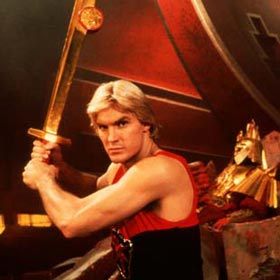
Queen - Flash Gordon (1980)

Tracklist:
1. Flash's Theme
2. In the Space Capsule
3. Ming's Theme
4. The Ring
5. Football Fight
6. In the Death Cell
7. Execution of Flash
8. The Kiss
9. Arboria
10. Escape from the Swamp
11. Flash to the Rescue
12. Vultan's Theme
13. Battle Theme
14. The Wedding March
15. Marriage of Dale and Ming
16. Crash Dive on Mingo City
17. Flash's Theme Reprise
18. The Hero

Saviour of the Universe - 6/10

Ah well... I’m not used to reviewing soundtracks and I would rather not do so, but since Flash Gordon is being looked at as a true studio album instead of a soundtrack I will give it a shot. In order to understand the recordings that together form the album, it is highly recommended that you see the movie Flash Gordon first. Only then all the pieces of music gain an identity and only then can one truly say whether it is appropriate or not.

So will I. I rather enjoyed the movie and its music. The tunes are not so much greater than soundtracks of other movies that have gone long out of print, except for the fact that this is written and recorded by Queen. Of course it fits the movie; else it would never have been accepted. The tragic scenes are accompanied with atmospheric sad tunes, the tense scenes have these mysterious tunes and the battle scenes are accompanied by heroic tunes. Yet what makes this soundtrack better than any other is something I do not know. As for this being written by Queen, there is nothing inside the music that could make that clear, perhaps except for the opening song and last five tracks. Also, most of the music has been arranged with synthesizers, which is something Queen has not done before, thus making it not a trademark Queen soundtrack, in contrast with a later movie’s soundtrack like Highlander’s, which just featured music from their album A Kind of Magic. Apart from that the album features lots of voice samples from the movie itself, giving somehow an identity to the song and gives you the proper place in the story to think about, but is quite annoying. “Vultan’s Theme (Attack of the Hawkmen)” is a great heroic theme, same with “Battle Theme”, but why the hell did they implement the shooting sounds from the laser guns? Bad move that is.

The opening song “Flash’s Theme” is based around this monotonous bass line with sudden outbursts of choir vocals and became the lead single of this ‘album’. It’s an okayish rock song nobody actually cares for. It’s reflected multiple times in other themes like in “Flash to the Rescue” and in “Marriage of Dale and Ming (and Flash approaching)” and at the party end “Flash’s Theme Reprise”. I guess it’s okay for the soundtrack. “The Hero” is the real end to the saga of Flash Gordon which also is a bit of a reprise of the main theme but is a totally new track as well complete with verses and vocals that celebrate the defeat of Ming and the victory of Flash. There is some weird playing with Ming’s Theme later on the song and some other themes, but it’s a satisfying end to the story of Flash Gordon.

All in all, Flash Gordon is not an album you’ll be likely to listen to a lot. Perhaps once or twice as you just bought it or decided to review it, like me. It serves well as a soundtrack to the movie, but as an album it just doesn’t gain a higher score than the one I gave. Get the movie for the full experience and if you desperately search for one of those tunes to have on CD, then that’s where Flash Gordon comes in. Otherwise, it’s collector’s only.

Nicest tunes: “Flash’s Theme”, “The Hero”, “Vultan’s Theme” and “Ming’s Theme”.